
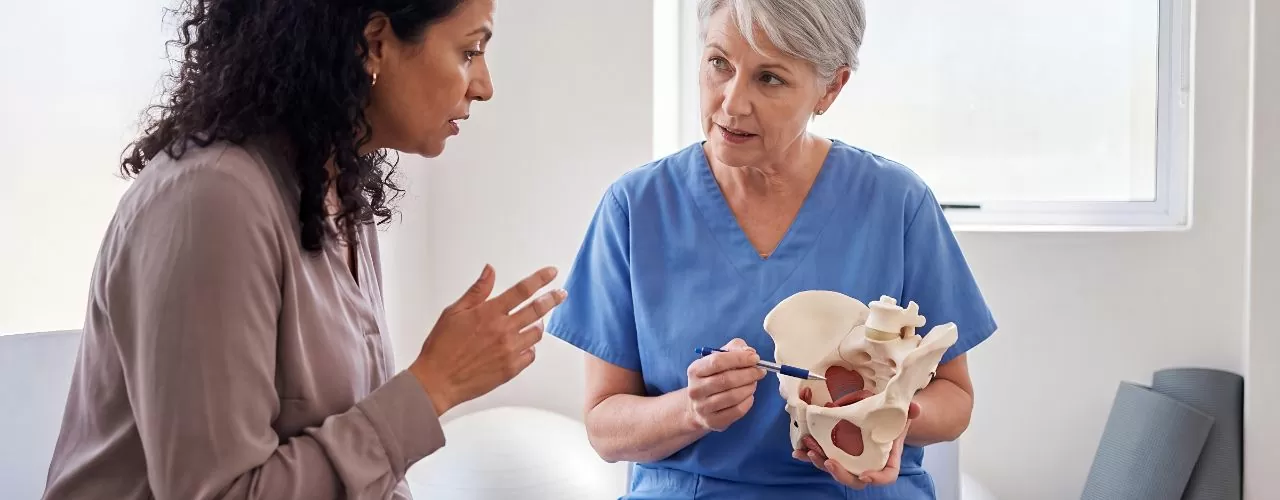
Feel Stronger and More Supported after a Pelvic Organ Prolapse
Pelvic pressure, heaviness, or a bulging sensation can leave you wondering what is happening inside your body. These symptoms may be associated with pelvic organ prolapse, which occurs when pelvic organs descend from their usual position.If you’re experiencing pelvic organ prolapse in Worthington, Grandview, Westerville and Dublin, OH, the pelvic health team at Fitness Matters can help you better understand your symptoms and find practical ways to manage them. With individualized physical therapy, you can work toward better pelvic floor function, improved confidence, and a more comfortable return to the activities that matter to you.
Understanding Pelvic Organ Prolapse
Your pelvic floor includes muscles and connective tissues that help support your bladder, uterus, rectum, and other pelvic structures. Pelvic organ prolapse occurs when this support system becomes weakened or stretched, allowing one or more organs to descend toward the vaginal opening.
Several types of prolapse can occur:
- A cystocele develops when the bladder drops and presses into the front wall of the vagina.
- A rectocele occurs when the rectum pushes against the back wall of the vagina.
- A uterine prolapse occurs when the womb slides down into the vaginal canal
Pregnancy and vaginal childbirth are common contributing factors, but prolapse can develop for other reasons, including:
- Aging
- Hormonal changes
- Chronic constipation and straining
- Frequent heavy lifting, persistent coughing
- Repeated increases in abdominal pressure
What Does Prolapse Feel Like?
Some people with a pelvic organ prolapse have few noticeable symptoms, while others experience changes that interfere with exercise, work, or daily routines. Signs may include:
- Pressure, fullness, or heaviness in the pelvis
- A bulge or sensation of something coming down in the vagina
- Symptoms that become more noticeable after prolonged standing or activity
- Urinary leakage, urgency, or difficulty emptying the bladder
- Constipation or difficulty having a bowel movement
- A feeling of incomplete bowel emptying
- Pelvic or lower back discomfort
- Discomfort with sexual activity
- Difficulty exercising or lifting comfortably
Building Better Pelvic Floor Support
Pelvic floor physical therapy in Worthington, Grandview, Westerville and Dublin, OH offers a conservative approach to managing many symptoms associated with pelvic organ prolapse. At Fitness Matters, your care begins with a thorough evaluation of your symptoms, pelvic floor function, movement patterns, strength, and personal goals.
Pelvic organ prolapse treatment focuses on improving the strength, coordination, and function of your pelvic floor. Depending on your evaluation, treatment may include:
- Pelvic floor strengthening and coordination exercises
- Relaxation techniques when muscles are overactive or poorly coordinated
- Breathing and abdominal pressure management
- Core and hip strengthening
- Posture and body mechanics training
- Strategies for lifting and exercising more comfortably
- Bowel and bladder habit education
- Guidance for managing constipation and reducing straining
- Strategies for activity modification to help you stay active
As your control and confidence improve, your program can progress with you.
Take Control of Your Pelvic Health
Pelvic organ prolapse may change how your body feels, but it doesn’t automatically mean you have to stop being active. The individualized, one-on-one approach at Fitness Matters can help you develop the strength, coordination, and strategies needed to better support your pelvic health.
Contact our clinic today to schedule an evaluation and learn how pelvic floor physical therapy in Worthington, Grandview, Westerville and Dublin, OH can help you address a pelvic organ prolapse and move with greater comfort and confidence.
Frequently Asked Questions
No. Physical therapy may be appropriate for people with different stages of prolapse, particularly when symptoms affect comfort, exercise, or daily activities. Your therapist can evaluate your specific needs and recommend an appropriate plan.
Frequent straining during bowel movements can increase pressure on the pelvic floor and may contribute to symptoms. Physical therapy can include education on bowel habits, positioning, breathing, and strategies to reduce unnecessary straining.
For many people, yes. Rather than automatically avoiding lifting, your therapist can assess your strength, breathing, technique, and pressure management. Treatment can then help you gradually work toward the activities and fitness goals that are important to you.
Are You Ready to Live Pain-Free?
Don’t let pain dictate your life. Take the first step towards reclaiming your mobility and well-being with our expert support. Start your journey to a healthier you today.
